Artificial Intelligence in Medical Coding: A Beginner's Guide
Artificial Intelligence in Medical Coding: A Beginner's Guide
Artificial intelligence for medical coding is technology that automatically codes elements of patient cases based on information in the patient’s record. Medical coding software suggests codes based on clinical documentation, and medical coders accept, amend, or reject suggested codes.
Medical coders will no longer type codes. Instead, coders will be responsible for reviewing and validating codes suggested by artificial intelligence. The most marketable coders in the near future will be those who are adept at auditing the output of AI.
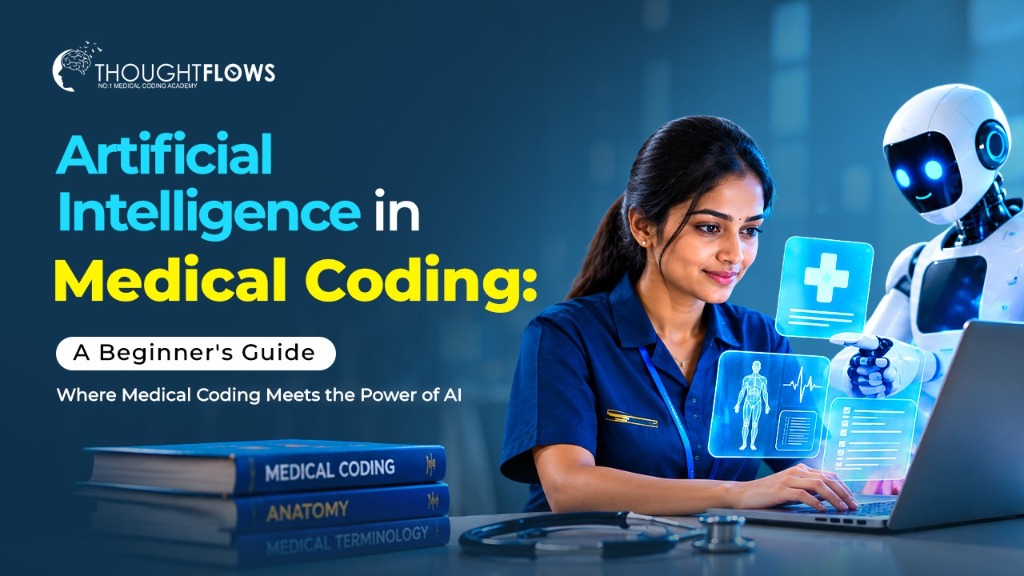
Artificial intelligence for medical coding is technology that automatically codes elements of patient cases based on information in the patient’s record. Medical coding software suggests codes based on clinical documentation, and medical coders accept, amend, or reject suggested codes.
Medical coders will no longer type codes. Instead, coders will be responsible for reviewing and validating codes suggested by artificial intelligence. The most marketable coders in the near future will be those who are adept at auditing the output of AI.
Key Takeaways
- AI and coders interact differently than the traditional coder/coding system. While medical coders will not be replaced, AI will alter their day-to-day work.
- The market for healthcare AI is expected to expand.
- There will always be a need for human coders to review AI output for errors.
- The employment of medical coders in the U.S. will continue to increase through 2034.
- It is important for students to learn both AI technology and code sets.
What is artificial intelligence in medical coding?
Artificial Intelligence in medical coding utilizes NLP (Natural Language Processing) or ML (Machine Learning) to recommend codes to the human coder based on the documentation in the record. The Human coder accepts the suggestions.
Other automated coding systems used in hospitals are called Computer-Assisted Coding systems (CAC). There are newer coding systems that are based on large language models (LLMs).
How big is the AI medical coding market?
High growth markets are attractive, and we at Straits Research expect the AI in medical coding market to rise from $3.41 billion in 2025 to $10.84 billion in 2034, at a healthy CAGR of 13.76%.
Other research firms give a more conservative outlook. For example, TechSci Research expects the market to be worth $4.22 billion in 2031, from a 2025 base of $2.45 billion, at a CAGR of 9.49%.
AI in medical coding is gaining traction in the U.S. Mordor Intelligence anticipates that the use of predictive AI in U.S. hospitals would reach 71% in 2024, up from 66% the previous year.
How does AI help medical coders?
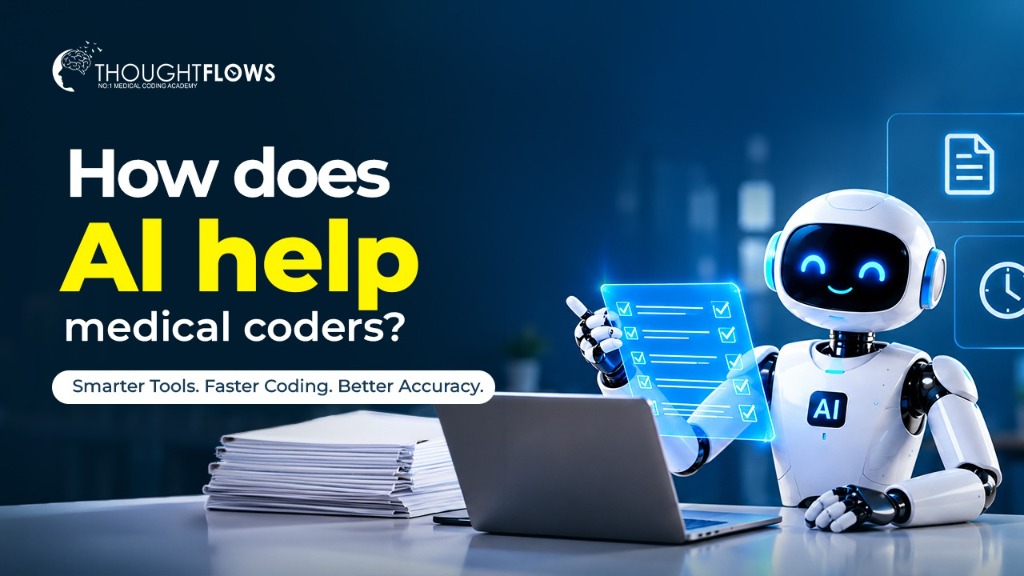
AI handles the repetitive parts of the job. This lets coders spend more time on complex charts.
- Scans documentation: Quickly finds diagnoses and procedures in complex medical records.
- Recommends codes: Knows appropriate coding guidelines and suggests ICD-10-CM, CPT, and HCPCS codes.
- Anticipates issues: Uses natural language processing to recognize potential issues including upcoding and missing/inadequate documentation.
- Encourages compliance: Supports authorization and attestation decisions to protect billing integrity.
Can AI replace medical coders?
No. Currently, AI needs human editing.
Mordor Intelligence revealed research claiming LLMs reach a top-1 accuracy of 68.1% for 30 most common DRGs when trained on clinical data. This suggests AI suggested first answers to 3 out of 10 questions in a given case, and the rest were either wrong or unrelated to the question.
AI implementation has also failed to decrease the overall workload on staff. According to the Medical Group Management Association, in a 2025 survey, 44% of leaders of management groups reported that AI failed to replace staff work, and the reason was attributable to the need for staff verification of AI outputs.
AI vs certified coder: who does what?
| Task | AI Tool | Certified Coder |
|---|---|---|
| Scanning long clinical notes | ✅ Fast | Reviews key sections |
| Suggesting codes | ✅ Yes | Accepts, edits, or rejects |
| Applying official guidelines and sequencing | Partial | ✅ Final authority |
| Handling unclear or missing documentation | ❌ Weak | ✅ Queries the physician |
| Legal accountability for the claim | ❌ None | ✅ Yes |
Are medical coding jobs still growing?
Yes. The US Bureau of Labor Statistics projects that employment of medical records specialists will grow 7% from 2024 to 2034, much faster than the average for all occupations.
- About 14,200 openings are projected each year over the decade.
- The median annual wage was $50,250 in May 2024.
- Employers may prefer candidates who hold a certification.
For Indian coders, this matters because a large share of US coding work is outsourced. Straits Research notes the outsourced mode led the market in 2025, and offshore teams in India are a big part of that supply chain.
What skills do beginners need in an AI-driven coding job?

At ThoughtFlows, artificial intelligence in medical coding skills are taught in two layers: core coding knowledge first, then AI review skills on top.
Core skills (non-negotiable):
- •Anatomy, physiology, and medical terminology
- •ICD-10-CM, CPT, and HCPCS guidelines
- •Code sequencing and modifier rules
- •A recognised certification such as CPC, CCS, or CRC
AI-era skills (the new edge):
- •Auditing AI-suggested codes against documentation
- •Spotting when AI misreads context (for example, "ruled out" vs "confirmed")
- •Writing clear physician queries
- •Basic comfort with CAC and EHR platforms
How does ThoughtFlows prepare students for AI-assisted coding?
At ThoughtFlows, artificial intelligence in medical coding is part of our training, not a shortcut around it. We see one pattern often: freshers who rely on tools too early struggle to catch AI mistakes. You cannot audit a code you do not understand.
So our training follows a "fundamentals first, validator second" approach:
Build the base
Students code charts manually until they can justify every code with a guideline.
Introduce AI output
Students review AI-style code suggestions and mark each as accept, edit, or reject.
Explain the decision
Every correction must cite the chart text and the official guideline.
Mock audits
Students practice the review-and-validate role that US clients now expect from offshore teams.
This mirrors what the job actually looks like today. The coder who can confidently say "the AI is wrong here, and here's why" is the coder employers keep.
Is medical coding a good career for beginners in 2026?

Yes, if you train for where the job is going. AI is removing the most repetitive work. It is increasing demand for coders who understand guidelines deeply and can review machine output.
Want to become an AI-ready certified coder?
Explore the CPC Certification Training Program, which includes ThoughtFlows' artificial intelligence in medical coding practice modules, or book a free counselling session with ThoughtFlows today.
Frequently Asked Questions
Table of contents
- Key Takeaways
- What is AI in Medical Coding?
- How Big is the Market?
- How Does AI Help Coders?
- Can AI Replace Medical Coders?
- AI vs Certified Coder: Who Does What?
- Are Medical Coding Jobs Growing?
- Skills Beginners Need in 2026
- How ThoughtFlows Prepares You
- Is it a Good Career for Beginners?
- Frequently Asked Questions

Enroll at Thoughtflows Medical Coding Academy for top-notch medical coding training. Our courses are designed to provide comprehensive education and practical experience, ensuring students become proficient and certified medical coders.
HEAD OFFICE